Humane Treatment of Animals
Description: The compassion and mercy of Islam not only encompasses humanity, but also extends to all creatures in the world.
- By Imam Mufti
- Published on 13 Feb 2006
- Last modified on 25 Jun 2019
- Printed: 1,086
- Viewed: 124,715 (daily average: 17)
- Rated by: 205
- Emailed: 23
- Commented on: 10


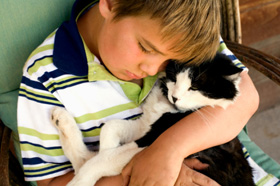 God, the Creator of human beings and animals, has made animals
subservient to us. We depend on animals for the food we eat and the milk we
drink. We bring animals into our homes for love and companionship. We survive
critical illness and live longer because of biomedical research on animals. We
visit to zoos and aquariums to gain an appreciation for the spectacular
diversity of life on earth. We benefit from specially trained dogs that detect
drugs, guide the blind, and assist the disabled. God says in the Quran:
God, the Creator of human beings and animals, has made animals
subservient to us. We depend on animals for the food we eat and the milk we
drink. We bring animals into our homes for love and companionship. We survive
critical illness and live longer because of biomedical research on animals. We
visit to zoos and aquariums to gain an appreciation for the spectacular
diversity of life on earth. We benefit from specially trained dogs that detect
drugs, guide the blind, and assist the disabled. God says in the Quran:
"And the cattle, He has created them for you. You have in them warm clothing and (other) advantages, and of them you eat. And therein is beauty for you, when you drive them back (home) and when you send them out (to pasture). And they carry your heavy loads to regions which you could not reach but with great distress to yourselves. Surely your Lord is Compassionate, Merciful. And (He made) horses and mules and asses that you might ride upon them and as an ornament. And He creates what you know not." (Quran 16:5-8)
The mercy of Islam extends beyond human beings to all living creations of God. Islam prohibits cruelty to animals. Fourteen hundred years ago, long before the modern animal rights movement began with the publication of Peter Singer’s book, "Animal Liberation," in 1975, Islam required kindness to animals and cruelty to them a sufficient reason for a person to be thrown into the Fire!
Once, the Prophet of Mercy spoke of God’s forgiveness due to the humane treatment of animals. He told his companions the story of a man who got thirsty on his way. He found a well, climbed down inside it to the water, and quenched his thirst. When he came out he saw a panting dog licking on mud out of extreme thirst. The man thought to himself, ‘The dog has become as thirsty as I was!’ The man went down the well again and got some water for the dog. God appreciated his good work and forgave him. The companions asked, ‘O Prophet of God, do we get rewarded on humane treatment of animals?’ He said, ‘There is a reward in (doing good to) every living being.’[1]
On another occasion, Prophet Muhammad, may the mercy and blessings of God be upon him, described God’s punishment of a woman who was sent to Hell because of a cat. She kept her locked up, neither feeding her nor setting her free to feed herself.[2]
Islam laid down humane slaughtering regulations. Islam insists that the manner of slaughter should be that which is least painful to the animal. Islam requires that the slaughtering instrument not be sharpened in front of the animal. Islam also prohibits the slaughtering of one animal in front of another. Never, prior to Islam, had the world witnessed such concern for animals.
Humane Islamic treatment of animals can be summarized by the following points:
First, Islam requires that pets or farm animals be provided with proper food, water, and a place to live. Once the Prophet passed by an emaciated camel due to hunger, he said:
"Fear God in regards to these animals who can not speak their will. If you ride them, treat them accordingly (by making them strong and fit for that), and if you [plan to] eat them, treat them accordingly (by making them fat and healthy)." (Abu Dawud)
Second, an animal should not be beaten or tortured. Once the Prophet of Mercy passed by an animal branded on his face. He said, ‘Has it not reached you that I have cursed the one who brands an animal’s face or hits it on its face?’[3] The Prophet of Mercy advised his wife to treat an unruly camel that she was riding kindly.[4] Making animals fight one another for entertainment was also forbidden by the Prophet.[5]
Third, Islam forbids using animals or birds for targets when practicing shooting. When Ibn Umar, one of the companions of Prophet Muhammad saw some people practicing archery using a hen as a target, he said:
"The Prophet cursed anyone who made a living thing into a target (for practice)."
The Prophet Muhammad also said:
"‘Whoever kills a bird or anything else without its due right, God would ask him about it.’ It was said: ‘O Messenger of God! What is its due right?’ He said: ‘To kill it for food…and do not sever its head, and throw it!’" (Targheeb)
Shooting at live pigeons was once an Olympic event and today dove shooting is allowed in many places.
Fourth, separating nestling birds from their mothers is not allowed in Islam.
Fifth, it is forbidden to mutilate an animal by cutting off its ears, tails or other body parts without just reason.
Sixth, a sick animal under one’s care should be treated properly.
Through these rules and regulations legislated in regards to animals, the Muslims gains the respect and understanding that other creatures are not to be used and abused as one wills, but that they, like humans, have rights which must be given in order to ensure that the justice and mercy of Islam be met to all which inhabit this earth.