Why Muslims Love the Month of Ramadan
Description: How Muslims spend the month of Ramadan.
- By Aisha Stacey (© 2008 IslamReligion.com)
- Published on 22 Sep 2008
- Last modified on 28 Jan 2026
- Printed: 571
- Viewed: 48,423 (daily average: 7)
- Rated by: 179
- Emailed: 23
- Commented on: 1


 Islam uses a lunar calendar—that is, each month begins
with the sighting of the new moon, therefore because the lunar calendar is
about 11 days shorter than the solar calendar, Islamic months “move” each year.
This year (2008) the Islamic month of Ramadan coincides almost exactly with the
month of September. For Muslims the coming of Ramadan is a source of joy and
celebration; however, we celebrate in a way that may seem strange to people
unfamiliar with the tenets of Islam. Ramadan is not a month of parties and socialising,
it is a month of worship. To fast the month of Ramadan is one of the pillars
of Islam.
Islam uses a lunar calendar—that is, each month begins
with the sighting of the new moon, therefore because the lunar calendar is
about 11 days shorter than the solar calendar, Islamic months “move” each year.
This year (2008) the Islamic month of Ramadan coincides almost exactly with the
month of September. For Muslims the coming of Ramadan is a source of joy and
celebration; however, we celebrate in a way that may seem strange to people
unfamiliar with the tenets of Islam. Ramadan is not a month of parties and socialising,
it is a month of worship. To fast the month of Ramadan is one of the pillars
of Islam.
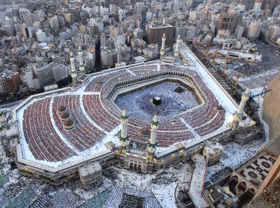
Muslims express gratitude and love for the One True God by obeying and worshipping Him. We worship according to His guidance revealed in the Quran and through the authentic traditions of Prophet Muhammad. Ramadan is special. It is a month of fasting, reading and coming to understand Quran and special extra prayers. The mosques come alive at night when Muslims gather to break their fast together and pray. The smooth rich sound of Quran recitation is heard throughout the long nights as Muslims stand shoulder-to-shoulder praying and praising God.
Muslims all over the world love the month of Ramadan and look forward to it with mounting excitement. In the weeks preceding Ramadan lives are scrutinised, and plans are made for a month of serious worship and supplication. The countdown begins and conversations start with how many weeks it is until the blessed month arrives. Perhaps non-Muslims wonder why we look forward to fasting days and sleepless nights. Ramadan offers the chance of redemption and great rewards. It is a month like no other. A month of spiritual reflection and prayer. Hearts are directed away from worldly activities and towards God.
In the month Ramadan, all physically mature and healthy Muslims are required to fast: to abstain from all food, drink, gum chewing, any kind of tobacco use and any kind of sexual contact between dawn and sunset. Nevertheless, this is only the physical aspect there are also the spiritual characteristics, which include refraining from gossiping, lying, slandering and all traits of bad character. All obscene and impious sights and sounds are avoided as a way of purifying thoughts and actions. Fasting is also a way of experiencing hunger and developing sympathy for the less fortunate and learning thankfulness and appreciation for all of God's bounties.
God said,
“O you who believe! Observing the fast is prescribed for you as it was prescribed for those before you, that you may become pious.” (Quran 2:183)
The Prophet Muhammad also reminded us that fasting is not just abstaining from food and drink but there is a further dimension. He said, “He who does not desist from obscene language and acting obscenely (during the period of fasting), God has no need that he didn’t eat or drink.”[1]
Ramadan is also the month when Muslims try to establish or re establish a relationship with the Quran. Although this may sound like a strange thing to say, the words of God are a guiding light and a mercy. Nobody reads Quran except that it changes his or her life in some way. The Quran was sent down in this month of Ramadan. The two, Ramadan and Quran are inextricably entwined. Being with the Quran, reading, memorising, reciting it or pondering its meanings is spiritually uplifting comforting and a source of strength. Recitation in the night is particularly beneficial, the distractions of the day have faded away and closeness of God is palpable in the stillness of the night. Special evening prayers are conducted during which portions of the Qur'an are recited. These prayers are known as Taraweeh. One thirtieth of the Qur'an is read on successive evenings, so that by the end of the month the entire Qur'an has been completed.
One of the last few odd-numbered nights of the month is Laylat ul-Qadr, the “Night of Power” or “Night of Destiny.” It is the holiest night of the holiest month; it is believed to be the night on which God first began revealing the Quran to the Prophet Muhammad through the angel Gabriel. This is a time for especially fervent and devoted prayer, and the rewards and blessings associated with such are many. Muslims are told in the Qur'an that praying throughout this one night is better than a thousand months of prayer. No one knows exactly which night it is; it is one of God's mysteries.
Ramadan is also the month of good deeds and charity. Muslims try to give generously and increase their good deeds. Charity can be as simple as a smile; there is no need for lavish displays. Charity given quietly is better for the recipient and one who gives. The Prophet Muhammad was always a generous person, never owning more than just enough to cover his immediate needs. Any extra, he gave generously to those around him, however he was most generous in Ramadan.
You may be beginning to wonder if these are not qualities and virtues a Muslim truly devoted to God, should display in any month, and you would be correct. They most certainly are. However, as human beings we all fall short, commit sins and make mistakes. Sometimes the nature of life causes us to forget our real purpose. Our purpose is to worship God and God in his infinite wisdom and mercy has given us Ramadan. It is a month, which if used wisely, can recharge our spiritual and physical batteries. It is a month full of mercy and forgiveness when God makes it easy for us to overcome our shortcomings, when He rewards us in abundance. He is our Creator, who understands that we are far from perfect. When we walk towards God, he meets us running, when we hold out our hand He reaches for us and bestows his forgiveness on us. Muslims love Ramadan, it is a lifeline. They stand shoulder to shoulder and bow their heads in submission. Ramadan spreads across the world as Muslims begin and break their fast together, one body, one people, and one nation. Ramadan arrives softly and her deeds ascend gently towards God. Far from being a trial of deprivation, the month of Ramadan is a joy and a gift beyond compare. Even before the month is finished Muslims begin to mourn the passing of this blessed month and try to extend the time by being with the Quran and worshipping God in the best way possible.