
Literacy in Islam (part 1 of 3): Books in Baghdad
Description: Even war and occupation cannot erase Baghdad’s legacy of literacy.
- By Aisha Stacey (© 2009 IslamReligion.com)
- Published on 26 Oct 2009
- Last modified on 28 Oct 2010
- Printed: 697
- Viewed: 60,727
- Rated by: 165
- Emailed: 3
- Commented on: 0


_001.jpg) Baghdad was hit by a series of explosions. The city
raked by violence. Baghdad equals chaos, death, and destruction. Baghdad is a city screaming in pain and dying in the smokescreen. As we watch the tangled
mess on our television screens, it is hard to imagine that Baghdad was once a
great seat of learning. Baghdad and books have been synonymous for hundreds of
years. Bookshelves line family homes and booksellers line the streets of Baghdad. Even now, amidst the rubble and pandemonium the residents of Baghdad shop for
books. “It is an old disease in Iraq – people spend their money on books, not on
food,” jokes an Iraqi translator for NBC News[1].
Baghdad was hit by a series of explosions. The city
raked by violence. Baghdad equals chaos, death, and destruction. Baghdad is a city screaming in pain and dying in the smokescreen. As we watch the tangled
mess on our television screens, it is hard to imagine that Baghdad was once a
great seat of learning. Baghdad and books have been synonymous for hundreds of
years. Bookshelves line family homes and booksellers line the streets of Baghdad. Even now, amidst the rubble and pandemonium the residents of Baghdad shop for
books. “It is an old disease in Iraq – people spend their money on books, not on
food,” jokes an Iraqi translator for NBC News[1].
In the period, that western history has come to call the Dark Ages, the love affair between Baghdad and books began. In a time when churches across Europe felt themselves fortunate to have a library consisting of several books, there was a street in Baghdad lined with more then 100 shops, each selling books, stationary, or both. Across the western world, literacy was restricted to the rich or religious authorities, but in Baghdad, the people had access to more then 30 libraries.
Within 200 years after the death of Prophet Muhammad, the small Islamic nation grew into an Empire that stretched from North Africa to Arabia, from Persia to Uzbekistan and pushed onwards to the frontiers of India and beyond. Around 750CE Baghdad, the city built on the banks of the Tigris River was established as the capital of the Islamic empire. Its location connected it to countries as far away as China, and Baghdad soon became not only the political and administrative centre but also the hub of culture and learning.
Men and women from all parts of the Empire flocked to Baghdad and brought with them knowledge from the far corners of the known world.
Muslims, Jews, Christians, Hindus, Zoroastrians, and even people from other more obscure faiths lived in Baghdad. Books began to symbolise life of Baghdad. The streets were alive with authors, translators, scribes, illuminators, librarians, binders, collectors, and sellers. However, these people from such diverse backgrounds need to be connected. Arabic developed as the language of scholarship and the connection was established.
The works of Plato, Aristotle, Ptolemy, and Plutarch among many others were translated into Arabic. Jewish philosophers used Arabic translations of Greek philosophical works to write their own treatise and essays. When Europe began to emerge from the Dark Ages into a period of enlightenment, they relied on books written in Arabic to redeem and reclaim the foundations of the Western empire.
Many of the original books translated in Baghdad were lost or destroyed in their home countries, and remained only in their Arabic translations. The scholars of Baghdad were responsible for preserving classical works from the Greeks, Romans, and Egyptians and even translated classics from Persia, India and China. These great works were then translated from Arabic back into languages such as Turkish, Persian, Hebrew, and Latin. Catholic theologian, Thomas Aquinas made his famous integration of faith and reason after reading Aristotle’s philosophy in a translation by Baghdad scholars.
The scholars of Baghdad not only collected and synthesised the great works, they added to the body of knowledge. They opened up new fields of scholarship, such as celestial mechanics, and introduced the world to algebra and geometry. A Baghdad scholar produced an ophthalmology textbook, believed the world’s first medical book containing anatomical drawings. It was the definitive work in both the east and west, and was used for more than eight centuries.
As Baghdad transformed itself into a centre of learning Caliph, Harun Al Rashid, and his son, al-Mamoon, opened one of history’s most renowned think tanks, Bayt al Hikmah, or the House of Wisdom. The scholars at the House of Wisdom, unlike their modern counterparts, did not "specialize.” Al-Razi was a philosopher and a mathematician as well as a physician, and al-Kindi, wrote on logic, philosophy, geometry, calculation, arithmetic, music, and astronomy. Among his works were such titles as The Reason Why Rain Rarely Falls in Certain Places, The Cause of Vertigo, and Crossbreeding the Dove.
The historian al-Maqrizi described the opening of the House of Wisdom in 1004 CE. “The students took up their residence. The books were brought from [many other] libraries ... and the public was admitted. Whosoever wanted was at liberty to copy any book he wished to copy, or whoever required to read a certain book found in the library could do so. Scholars studied the Quran, astronomy, grammar, lexicography and medicine. The building was, moreover, adorned by carpets and all doors and corridors had curtains, and managers, servants, porters, and other menials were appointed to maintain the establishment.”[2]
Books have always played a role in the life of Baghdad. In 11th century CE Baghdad , a manuscript “... was about the size of the modern book, containing good quality paper with writing on both sides, and bound in leather covers”. An average bookshop contained several hundred titles including the Quran and commentaries on the Quran, languages and calligraphy, Christian and Jewish scriptures, histories, government works, court accounts, pre-Islamic and Islamic poetry, works by various schools of Muslim thought, biographies, astronomy, Greek and Islamic medicine, literature, popular fiction, and travel guides (to India, China, Indochina).[3]
Today, as the bombs explode around them and their world falls into an abyss, the people of Baghdad hold on to their literary heritage. Amongst the rubble, the booksellers ply their trade and the citizens of Baghdad make choices between reading and eating. This however is not surprising for Islam has a long tradition of literacy. The first word of Quran revealed to Prophet Muhammad was iqra – read, learn, and understand In part two we will go on a journey of discovery to see what the Quran and the authentic traditions of Prophet Muhammad say about literacy and seeking knowledge.
Literacy in Islam (part 2 of 3): Seeking Knowledge
Description: The first revealed word of the Quran began a legacy of literacy and education for all.
- By Aisha Stacey (© 2009 IslamReligion.com)
- Published on 02 Nov 2009
- Last modified on 23 Mar 2010
- Printed: 652
- Viewed: 64,609
- Rated by: 165
- Emailed: 2
- Commented on: 0
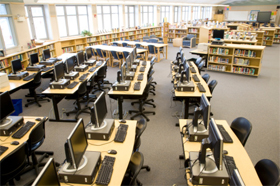 Islam is a
religion that is concerned with literacy. When the Quran was revealed the
first word was iqra – read, learn, understand. In a cave, outside Mecca, the angel Gabriel squeezed Prophet Muhammad’s chest and demanded that he read. Unable
to read or write the Prophet replied, “I cannot read”.
Islam is a
religion that is concerned with literacy. When the Quran was revealed the
first word was iqra – read, learn, understand. In a cave, outside Mecca, the angel Gabriel squeezed Prophet Muhammad’s chest and demanded that he read. Unable
to read or write the Prophet replied, “I cannot read”.
“Read! In the Name of your Lord, Who has created (all that exists). He has created man from a clot (a piece of thick coagulated blood). Read! And your Lord is the Most Generous, Who has taught by the pen, He has taught man that which he knew not.” (Quran 96:1-5)
Prophet Muhammad never learned to read or write but he did understand the importance of literacy. Although the majority of Arabs at the time were illiterate, they possessed a powerful and eloquent love of words. Arabs were masters of the spoken word – poetry, story telling, and memorising genealogies. Encouraging literacy was a natural progression.
Muslims believe that the words of the Quran are the literal words of God, and preserving them was always of paramount concern. From the earliest days of Islam, the Prophet’s companions began to write down the words of the Quran. They were written on bark, bone, animal skins, and even stones. This ushered in a new era of literacy.
Many of the first Muslims were poor, without position or prestige in Meccan society, or were slaves. Islam offered them a chance of equality and respect. Prophet Muhammad wisely understood that his new nation would have a better chance of surviving, and thriving, if its followers were literate and well educated.
After the battle of Badr, the first battle against the Meccan oppressors, the fledgling Muslim army took seventy prisoners. Prophet Muhammad knew that most of the prisoners were literate and he offered freedom to those who taught ten Muslims to read and write.
The new Muslims began to understand the importance of implementing Quran’s guidance into their lives. Then, just as now, literacy allowed the believers to look at the world around them and contemplate the wonders of creation, and the magnificence of The Creator. The believers read Quran to be come closer to God. They seek knowledge in order to strengthen their faith. They implement that knowledge in order to worship God, with true submission and certainty.
“And that those who have been given knowledge may know that it (this Quran) is the truth from your Lord, so that they may believe therein, and their hearts may submit to it with humility. And verily, God is the Guide of those who believe, to the Straight Path.” (Quran 22:54)
In his traditions that were painstakingly recoded by Muslim scholars, Prophet Muhammad encouraged his followers to seek knowledge[1]. He said that if someone followed a path in pursuit of knowledge, God would make his path to Paradise easy.[2] He also said that knowledge was one of three good deeds that continued even after death.[3]
Human beings have minds and intellect. We also have the power of reasoning and the free will to accept or reject knowledge. God created human beings with the tools for acquiring knowledge. He taught the father of humankind, Adam, the names of everything. Adam was taught language skills, and how to apply knowledge, make plans and decisions, and achieve goals. We, the children of Adam, have inherited these skills in order that we can exist in the world and worship God in the best manner.
“He taught Adam all the names of everything.” (Quran 2:31)
“And He gave you hearing, sight, and hearts, that you might give thanks (to God).” (Quran 16:78)
The pursuit of knowledge is important in Islam. Prophet Muhammad encouraged his followers to attend learning classes, and he sent teachers of Quran to the outlying tribes and far away cities. He sat with his followers and taught them the principles of Islam, and he listened attentively, often with tears running down his face, to their recitation of Quran. Prophet Muhammad said the best of his followers were those who learnt the Quran and then taught it to others.[4]
The first Muslims established schools for teaching and learning Quran and Islamic sciences. Islam was practiced secretly for fear of persecution, however a school was established in the house of a man by the name of Akram. Even now in the 21st century, across the Islamic world, students attend schools named Darul Akram (The house of Akram) in memory and recognition of the first Islamic school.
Islam holds knowledge, education, literacy, and intellectual pursuits in high regard. Throughout Islamic history, there are countless instances of the establishment of schools and universities, and libraries and think tanks. Muslims established theories of education, wrote curriculums, pursued literature and art, and took the concept of seeking knowledge to new heights. In part three we will look at theories of education and the establishment of schools and centres of learning.
Literacy in Islam (part 3 of 3): Education for all
Description: Education in early Islamic history.
- By Aisha Stacey (© 2009 IslamReligion.com)
- Published on 09 Nov 2009
- Last modified on 10 Nov 2013
- Printed: 738
- Viewed: 56,425
- Rated by: 164
- Emailed: 3
- Commented on: 1
“Read! In the Name of your Lord, Who has created (all that exists). He has created man from a clot (a piece of thick coagulated blood). Read! And your Lord is the Most Generous, Who has taught by the pen, He has taught man that which he knew not.” (Quran 96:1-5)
_001.jpg) The first word of Quran revealed to Prophet Muhammad, may
the mercy and blessings of God be upon him, was read. Read in
the name of your Lord. God asks the believers to read, seek knowledge, contemplate
the universe and its wonders, and give thanks. Consequently, from day one
Islam has encouraged literacy and education. Throughout Quran, God repeatedly emphasises
the importance of education.
The first word of Quran revealed to Prophet Muhammad, may
the mercy and blessings of God be upon him, was read. Read in
the name of your Lord. God asks the believers to read, seek knowledge, contemplate
the universe and its wonders, and give thanks. Consequently, from day one
Islam has encouraged literacy and education. Throughout Quran, God repeatedly emphasises
the importance of education.
“God will exalt in degree those of you who believe, and those who have been granted knowledge.” (Quran 58:11)
“And be not in haste (O Muhammad) with the Quran before its revelation is completed to you, and say, “My Lord! Increase me in knowledge.” (Quran 20:114)
From its inception, Islam has encouraged learning. It fosters scientific inquiry; open learning circles; the use of community resources; peer review; problem solving approaches; story telling and free education. The importance of learning is highlighted by the fact that Prophet Muhammad established education as an integral part of Islam.
Prophet Muhammad established the first Knowledge Sessions at Dar’ul Arqam.[1] He would sit in the mosque after prayers, his companions gathered around him, teaching them about the foundations of Islam, the importance of morality and most importantly the Oneness of God. Prophet Muhammad taught the students in his knowledge sessions verses of Quran and he sent Quran teachers to communities outside Mecca and Medina.
Memorising and understanding the Quran was, and still is the most important subject in Islamic education, followed by learning and memorising the traditions of Prophet Muhammad. These traditions are transmitted via a chain of narration that guarantees their authenticity, in much the same way that reference lists and bibliographies are used today to guarantee honesty in scholarship.
The teachers closely followed the traditions of Prophet Muhammad, may the mercy and blessings of God be upon him. They sat on the ground with their pupils seated in a semi circle in front of them. Beside the teacher would be his most trusted and learned student, transcribing all that was said. Education in Islam grew rapidly from small learning circles to schools attached to mosques. Within a short time, larger schools and universities began to spring up all over the Islamic Caliphate.
As the Caliphate expanded, the Prophet’s method of teaching spread. Gathering and transmitting Quran and Islamic knowledge was considered a praiseworthy occupation. Kuttabs (learned men) and mu’allams (teachers) were found in every Islamic city and village. Ibn Hawqal on his visit to Sicily claimed to have counted about 300 elementary teachers. Jubayr b. Hayya, who was later to be an official and governor in the early Islamic Caliphate was a teacher in a school in Taif. Islamic personalities such as al-Hadjadd and the poet’s al-Kumayt and al-Tirimmah are said to have been schoolmasters.[2]
The most renowned and well-respected scholars considered it an honour to teach. Ibn Muzahim (d. 723CE ) exegist, traditionist and grammarian, is said to have had a school in Kufa attended by more than 3000 children. In order to supervise all his pupils he rode up and down between the rows of children on a mule.
Other subjects began to be added to Islamic education. There were classes in Islamic manners, Islamic law and jurisprudence, mathematics, grammar and medicine, agriculture, ethics, civics, economics, and history. The teachers, their assistants and their students all took education very seriously. The method of one teacher is described in the following passage.
“He went several times over the passage from the law book; revised it with the students after they had committed it to memory; called attention to the divergent rulings of Imams Malik and Abu Hanifa in particular, and sometimes of others and to the reservations of the text. He then quoted the proof texts, then he set forth analogous cases in very clear language, repeating them in different words till they sank into the students minds.”[3]
The mosques and schools were generally charitable foundations. Literacy and education was encouraged so vigorously that no pupil was turned away. Lack of money did not mean lack of education. Remarkable similarities exist between procedures established in early Islamic institutions and educational facilities today. There were prizes for proficiency, poetry, and oratory contests; examinations were conducted, and degrees granted.
A famous educator was Ibn Sina (known in the west as Avicenna) who was a thinker, doctor, and teacher. In the 10th century CE, he wrote medical textbooks that were used as primary medical references for more than 800 years. Ibn Sina developed curriculums and theories of education able to stand the tests of time.
He emphasized the need for children to learn the Quran, poetry, devoutness and ethics. But he also did not ignore a child’s need for play, movement, and diversion.[4] He thought the overall aim of education was the physical, spiritual, and moral growth of each individual. He thought of education as a way of preparing children to make a lasting contribution to their society.
Although unlettered, Prophet Muhammad, may the mercy and blessings of God be upon him, understood the importance of literacy and education. He inspired his followers to seek knowledge and pass that knowledge on to others. He taught the importance of memorising Quran and acting upon the knowledge it conveys. He encouraged his followers to look for the signs of God’s magnificence in the world around them. To love God one has to know Him, Knowing Him comes by understanding the splendour of the world He created. Knowledge is the key to loving our Creator and worshipping Him in the best way.
Footnotes:
[1] See part 2 of Literacy in Islam.
[2] http://www.muslimheritage.com/topics/
[3] A. S. Tritton: Muslim Education in the Middle Ages. London: Luzac and Co. Ltd., 1957, p. 90.
[4] (http://www.muslimheritage.com/topics/default.cfm?TaxonomyTypeID=101&TaxonomySubTypeID=129&TaxonomyThirdLevelID=-1&ArticleID=1063)


Add a comment